
Introduction to Materials Science
6 subjects · structured reading from the supplied course material
Introduction to Materials Science and Engineering
Materials Science and Engineering is a captivating field that lies at the crossroads of science, engineering, and innovation. It delves into the very fabric of our world, unravelling the mysteries of how different materials are composed, how they interact with their surroundings, and how they can be manipulated to create novel technologies and improve our quality of life. This introduction serves as the gateway to understanding the foundational concepts that underpin this multidisciplinary discipline.
Materials Science and Engineering can be described as the study of the structure, properties, processing, and applications of materials. It serves as a bridge between fundamental scientific principles and real-world engineering applications. At its core, the field seeks to answer questions like: What are materials made of? How do their atomic arrangements influence their properties? How can we engineer materials to achieve specific outcomes? From aerospace to medicine, electronics to energy, materials are the heart of technological advancements.
The scope of Materials Science is wide-ranging, encompassing:
Structure: Investigating the atomic and molecular arrangement of materials, understanding how these arrangements affect properties, and identifying defects and imperfections that influence behaviour.
Properties: Analysing the mechanical, thermal, electrical, magnetic, and optical attributes of materials, enabling engineers to select the right material for the intended application.
Processing: Delving into techniques used to shape, modify, and synthesize materials, ensuring they exhibit the desired characteristics.
Performance: Evaluating how materials withstand external forces, temperature variations, and other stresses, providing insights into their reliability and durability.
Relationship between structure, properties, and processing
Design: Tailoring materials to specific needs, crafting them to enhance properties and optimize their performance.
Sustainability: Considering the environmental impact of materials, their life cycle, and their potential for reuse and recycling.
Materials Triangle:
Materials Science lies the interplay between a material's structure, its properties, and the way it's processed. This relationship is often represented by the materials triangle. The structure determines the material's behaviour, and by manipulating the processing, engineers can tailor properties to meet specific needs.
Importance of materials in various industries
Importance of Materials in Various Industries:
The significance of materials extends across every industry, influencing technology, infrastructure, and innovation. Here is a glimpse into how materials shape different sectors:
Aerospace: Lightweight, high-strength materials for aircraft and spacecraft construction, enabling fuel efficiency and safe travel.
Electronics: Semiconductors, conductors, and insulators drive the electronics revolution, powering everything from smartphones to supercomputers.
Biomedical: Biocompatible materials for implants, prosthetics, and drug delivery systems, revolutionizing medical treatments.
Energy: Advanced materials in batteries, solar panels, and fuel cells, paving the way for renewable energy solutions.
Construction: Durable, sustainable materials for buildings, bridges, and roads, ensuring structural integrity and longevity.
Automotive: Lightweight materials enhance vehicle performance, safety, and fuel efficiency, driving automotive evolution.
Structure of Matter and Atomic Bonding
In the complex embroidery of the universe, the structure of matter is a fundamental thread that weaves through the fabric of reality. At the heart of this structure lies the mysterious movement of atoms and the forces that bind them together. The study of atomic bonding and the arrangement of atoms in materials is a cornerstone of science, leading to remarkable insights into the behaviour and properties of matter.
The Atom:
The atom, though often depicted as a simple entity, is a marvel of complexity. It serves as the building block of matter, consisting of a nucleus at its core, containing protons and neutrons, surrounded by a cloud of electrons. The nature of these subatomic particles and their arrangement gives rise to the rich diversity of elements that constitute the periodic table.
Atomic Bonding:
The forces that hold atoms together to form molecules and materials. There are three primary types of atomic bonding:
1. Ionic Bonding: This occurs between atoms with significantly different electronegativities. One atom donates electrons to another, resulting in the formation of positively and negatively charged ions. These ions are held together by electrostatic forces, creating ionic compounds with distinct properties. An iconic example is table salt (sodium chloride), formed from sodium and chlorine ions.
2. Covalent Bonding: Covalent bonds form when atoms share electrons to achieve a stable electron configuration. This type of bonding is common in nonmetals and is responsible for the creation of molecules with varying degrees of complexity. Diamond, composed entirely of carbon atoms covalently bonded in a crystalline lattice, is a prime example of this strong bond.
3. Metallic Bonding: Metallic bonding is prevalent in metals and is characterized by a "sea" of delocalized electrons that move freely throughout the lattice of positively charged metal ions. This arrangement imparts metals with their unique properties, such as malleability, electrical conductivity, and lustre.
Crystal lattice structures and unit cells
Crystalline and Amorphous Structures:
Two broad categories are: crystalline and amorphous.
1. Crystalline Materials: In these materials, atoms are arranged in a highly ordered, repetitive pattern known as a crystal lattice. This precise arrangement gives rise to distinct crystallographic planes and directions. Different crystal structures, such as cubic, hexagonal, and tetragonal, dictate the properties of materials. For example, the diamond cubic structure of silicon forms the basis of the semiconductor industry.
2. Amorphous Materials: In contrast, amorphous materials lack a long-range ordered structure. The atoms are arranged more randomly, resulting in materials with properties that differ from their crystalline counterparts. Glass is a classic example of an amorphous material, displaying transparency and unique optical properties due to its disordered structure.
Quantum theories:
The exploration of atomic bonding delves even further into the realm of sub-atomic level. Quantum theories, such as valence bond theory and molecular orbital theory, provide sophisticated models for understanding how atomic orbitals interact to form bonds.
Valence Bond Theory:
The Valence Bond theory, developed primarily by Linus Pauling, describes the formation of chemical bonds because of overlapping atomic orbitals. It focuses on the idea that covalent bonds are formed when atoms share electrons to achieve a more stable electronic configuration. In this theory, when two atoms approach each other to form a bond, their valence atomic orbitals overlap. This overlapping region becomes the bonding region, and the electrons in these orbitals are shared by both atoms. This introduces the concept of hybridization to explain molecular geometry and bonding in molecules. Hybridization involves mixing different types of atomic orbitals to create a set of hybrid orbitals that better accommodate the electron pairs involved in bonding.
Valence Bond theory provides an intuitive approach to understanding chemical bonding and shapes of molecules. However, it has limitations in explaining the full electronic behaviour of complex molecules and in predicting molecular properties.
Molecular Orbital Theory:
The Molecular Orbital theory offers a more comprehensive approach to understanding molecular structure and bonding. It was developed by scientists like Robert Mulliken and Friedrich Hund. In this theory, molecular orbitals are constructed from atomic orbitals, describing the distribution of electrons throughout a molecule. Molecular orbitals are mathematical constructs that describe the probability distribution of finding electrons within a molecule. They are formed by combining atomic orbitals using linear combinations, leading to bonding and antibonding orbitals. When atomic orbitals combine, they create bonding and antibonding molecular orbitals. Electrons in bonding orbitals contribute to stabilizing the molecule, while those in antibonding orbitals contribute to destabilization.
This theory provides a more complete picture of molecular properties, including bond length, bond energy, and molecular stability. It can also predict spectroscopic properties like electronic and vibrational spectra. Hybridization is not emphasized as it is in Valence Bond theory. Instead, Molecular orbital theory explains bonding through interactions between molecular orbitals. Hybrid orbitals often arise as a simplification in describing molecular shapes and bond angles.
Crystal Structures and Unit Cells
In the intricate world of materials science, the study of crystal structures and unit cells offers a key to understanding the mesmerizing symmetries and patterns that govern the behaviour of matter. From the arrangement of atoms to the properties of materials, crystallography forms the backbone of our comprehension, unveiling the hidden geometry that shapes the material universe.
Crystalline materials constitute a significant portion of the substances that surround us. Whether it's the sparkle of a diamond, the orderly arrangement of table salt, or the iridescence of a snowflake, the distinct characteristics of crystalline materials are rooted in their internal atomic structure.
Crystal Structures:
A crystal structure refers to the three-dimensional arrangement of atoms, ions, or molecules in a repeating pattern throughout the entire material. These structures are defined by the positions of the constituent particles, the lengths of the bonds between them, and the angles between the bonds.
Primitive and non-primitive unit cells
Lattice and Unit Cell:
The lattice is a conceptual framework that represents the periodic arrangement of points in space, each point corresponding to an atom or ion. This lattice is replicated infinitely in all directions to form the crystal structure. The smallest repeating unit of this lattice is known as the unit cell. The unit cell encapsulates the entire pattern, and by replicating it in all directions, the crystal structure emerges.
Calculation of atomic packing factor
Types of Lattices and Unit Cells:
Several types of lattices and unit cells serve as the foundation for crystalline materials:
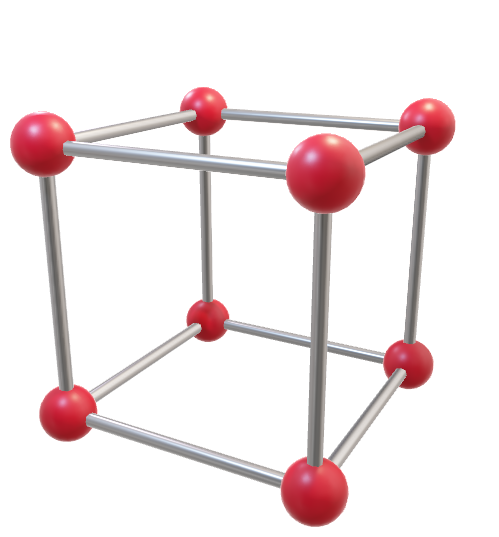
Simple Cubic (SC): In this arrangement, atoms are positioned at the corners of a cube. Each atom is only in contact with six neighbouring atoms. This structure is rare due to its low packing efficiency.
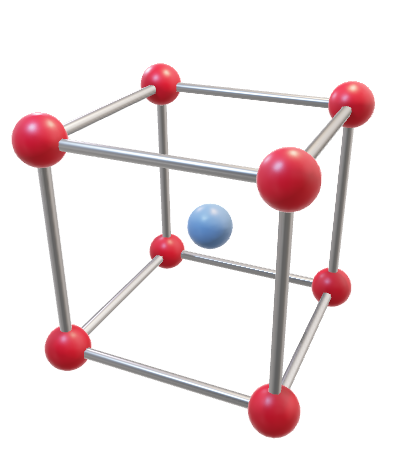
Body-Centered Cubic (BCC): Like the SC structure, this arrangement has atoms at the corners and an additional atom at the center of the cube. BCC structures have better packing efficiency than SC structures.
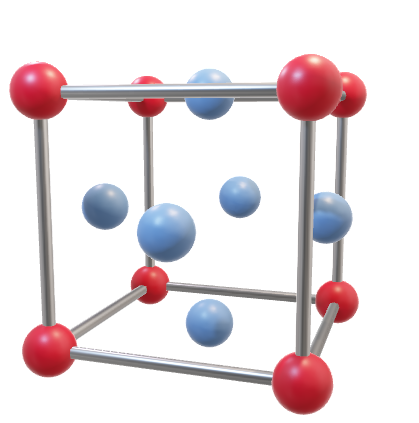
Face-Centered Cubic (FCC): In this arrangement, atoms are present at the corners and the centers of all faces of the cube. FCC structures have the highest packing efficiency among the three cubic systems.
Hexagonal Close-Packed (HCP): This arrangement involves close-packing of atoms in layers, with each layer directly above or below another. Hexagonal arrays are formed, and this structure is commonly found in metals such as magnesium and titanium.
Body-Centered Tetragonal (BCT): A variation of the BCC structure, this arrangement involves stretching one axis to form a rectangular prism.
Miller Indices:
Miller indices are a notation system used to describe crystal planes and directions within a crystal lattice. They represent the reciprocals of the intercepts of the plane with the unit cell axes. Miller indices provide a compact way of denoting different crystallographic orientations and planes.
Miller indices and crystallographic planes
Crystallography in Applications:
The knowledge of crystal structures and unit cells plays a pivotal role in various applications:
Material Properties: Crystal structures dictate mechanical, electrical, thermal, and optical properties of materials.
Phase Transformations: Understanding crystal structures aids in predicting phase transformations, such as solid-solid transitions.
Materials Design: Crystallography guides the selection of materials for specific applications, ensuring desired properties.
Semiconductor Devices: Knowledge of crystal structures is crucial for designing semiconductor devices with desired electronic properties.
Defects in Crystals
In the seemingly perfect world of crystal structures, imperfections abound. These imperfections, known as defects, are not mere anomalies but are fundamental to the behaviour, properties, and even the very existence of crystalline materials. By delving into the realm of crystal defects, we uncover a fascinating landscape that provides insights into the intricacies of material science and engineering.
Defining Crystal Defects:
A crystal defect refers to any irregularity, deviation, or distortion from the ideal atomic arrangement within a crystal lattice. While crystals are often depicted as pristine and flawless, the reality is that defects are inherent and prevalent in virtually all crystalline materials. These imperfections can arise from a variety of sources, including the growth process, external stresses, and thermal fluctuations.
Types of Crystal Defects:
Crystal defects can be classified into three main categories based on their dimensions: point defects, line defects, and planar defects.
1. Point Defects: Point defects involve the irregularity of individual atoms or ions within the crystal lattice. The three primary types of point defects are:
Vacancies: Occur when an atom is missing from its lattice site, creating an empty space or "vacancy."
Interstitials: Arise when atoms or ions occupy positions between regular lattice sites, causing local distortion.
Substitutional Defects: Involve the replacement of one type of atom with another at lattice sites, altering the composition.
2. Line Defects: Line defects, often referred to as dislocations, are linear imperfections that affect the arrangement of atoms along a specific line or direction within the crystal lattice. Dislocations are crucial in determining a material's mechanical properties, particularly its plastic deformation behaviour. There are two main types of dislocations:
Edge Dislocations: Occur when an extra half-plane of atoms is inserted into the lattice, causing a step-like distortion.
Screw Dislocations: Arise when a helical path is formed around a dislocation line due to shear stress.
3. Planar Defects: Planar defects, also known as two-dimensional defects, involve the distortion or irregularity of atomic arrangement within a specific plane. Two common types of planar defects are:
Grain Boundaries: Arise when two regions of a crystal lattice, called grains, have different orientations. Grain boundaries have significant implications for material strength, corrosion resistance, and other properties.
Stacking Faults: Result from an error in the stacking sequence of atomic layers. They can lead to regions of local distortion and affect material properties.
How Crystal Defects effect on Properties:
While defects may seem like undesirable aberrations, they play a critical role in influencing material properties and behaviours. In fact, defects are not always detrimental; they can also be harnessed to enhance certain characteristics.
1. Mechanical Properties: Dislocations can provide a mechanism for plastic deformation, allowing materials to be shaped and formed. The movement of dislocations is responsible for the ductility and malleability of metals.
2. Electrical Properties: Point defects, such as doping with impurities, can alter a material's electrical conductivity. Semiconductors, for example, rely on controlled doping to create electronic devices.
3. Diffusion and Transport: Point defects, particularly vacancies and interstitials, can influence the rate at which atoms or molecules diffuse through a material. This is crucial in various applications, including materials for energy storage and corrosion resistance.
4. Optical Properties: Defects can lead to the formation of energy levels within the band gap of a material, affecting its optical properties. Luminescence, colour centers, and defects in semiconductors are examples of this.
Point defects: vacancies, interstitials, impurities
Defects and Materials Design:
Understanding defects is not only essential for explaining existing material behaviours but also for designing materials with tailored properties. Defect engineering involves deliberately introducing and controlling defects to enhance desired characteristics. This approach is particularly relevant in fields like semiconductor technology and catalysis.
Mechanical Properties of Materials: Stress, Strain, and Elasticity
The behaviour of materials under mechanical forces is a foundation of engineering and design. From bridges that span vast distances to the intricate components of electronic devices, understanding the mechanical properties of materials is essential for ensuring reliability, safety, and optimal performance. At the heart of this understanding lies the exploration of stress, strain, and elasticity – concepts that provide a deep insight into how materials respond to external forces.
Introduction to stress and strain
Stress and Strain:
1. Stress: Stress is a fundamental concept that describes the internal resistance of a material to external forces. It is the force per unit area (S=F/A) acting on a material. Stress can be categorized into several types:
Normal Stress: The force applied perpendicular to a unit area. Tensile stress occurs when the force pulls the material, while compressive stress results from a force that compresses the material.
Shear Stress: The force parallel to the area. It is responsible for the deformation of materials in a sliding or twisting manner.
Stress is measured in units of force per unit area, such as N/m² (Pascals) or psi (pounds per square inch).
2. Strain: Strain is the measure of how a material deforms under the influence of stress. It represents the change in size or shape of a material relative to its original size. Strain is dimensionless and is often expressed as a percentage change in length.
Normal Strain: Reflects the change in length per unit length in the direction of the applied stress. Tensile strain results in elongation, while compressive strain leads to contraction.
Shear Strain: Describes the angular distortion of a material in response to shear stress. Strain is a unitless quantity, representing a fractional change in dimension.
Elasticity:
Elasticity is a material's ability to deform under stress and return to its original shape and size when the stress is removed. Hooke's Law, expressed as stress = modulus × strain, characterizes the linear relationship between stress and strain within the elastic deformation region. The modulus represents a material's stiffness and is categorized into different types:
Young's Modulus (E): Describes the material's resistance to elongation or compression in the direction of the applied force. It is used for normal stresses.
Shear Modulus (G): Reflects a material's response to shear stress.
Bulk Modulus (K): Quantifies the material's response to volume-changing stresses, such as hydrostatic pressure.
Elasticity is a crucial property for engineering design, as it determines how a material will behave under different loads and conditions.
Hooke's Law and elastic deformation
Hook’s Law and Elastic Deformation:
Hooke's Law is a principle in physics that describes the behaviour of elastic materials when subjected to small deformations. It was formulated by the English scientist Robert Hooke in the 17th century. Hooke's Law states that the force required to deform an elastic material is directly proportional to the amount of deformation produced by that force, as long as the deformation remains within the material's elastic limit.
Mathematically, Hooke's Law can be expressed as:
F = k * ΔL
Where:
F is the force applied to the material.
k is the material's spring constant or stiffness coefficient, which quantifies the material's resistance to deformation.
ΔL is the change in length of the material caused by the applied force.
It's important to note that Hooke's Law is only valid within the elastic limit of a material. The elastic limit is the point beyond which the material's deformation becomes permanent, and it starts to exhibit plastic behavior (meaning it won't return to its original shape when the force is removed).
Elastic deformation refers to the reversible change in the shape or size of a material when a force is applied to it. In this region, the material returns to its original shape once the deforming force is removed. Elastic deformation occurs as long as the material's stress (force per unit area) is within its elastic limit. This can be seen, for instance, in the stretching of a rubber band or the compression of a spring.
Stress-Strain Curve:
The stress-strain curve is a graphical representation of a material's mechanical properties. It reveals how a material responds to increasing stress and provides insights into its strength, ductility, and other characteristics.
Elastic Region: Initially, stress and strain are linearly proportional, reflecting the material's elastic deformation. The material returns to its original shape once the stress is removed.
Yield Point: Beyond a certain stress, the material may start to exhibit plastic deformation, where permanent changes occur even after the stress is removed. The yield point marks the transition from elastic to plastic behaviour.
Plastic Deformation: In this region, stress and strain are no longer linearly related, and the material undergoes plastic deformation.
Ultimate Tensile Strength: The point at which the material reaches its maximum strength before failure.
Fracture Point: The point at which the material ultimately fractures.
Applications of Mechanical Properties:
Understanding mechanical properties is crucial in various engineering and scientific fields:
1. Structural Engineering: The mechanical properties of materials determine their suitability for different structural applications. Bridges, buildings, and other structures are designed to withstand specific loads, considering material strengths and deformations.
2. Material Selection: Mechanical properties guide material selection for specific applications. For instance, materials with high tensile strength are chosen for load-bearing components, while materials with good thermal conductivity are suitable for heat transfer applications.
3. Manufacturing Processes: Knowledge of mechanical properties helps in designing manufacturing processes that involve deformation, shaping, or assembly of materials.
4. Biomechanics: In the medical field, understanding the mechanical properties of biological tissues is essential for designing prosthetics, implants, and medical devices that interact effectively with the body.
Poisson's ratio and bulk modulus
Poisson's ratio and bulk modulus:
Poisson's Ratio and Bulk Modulus are two important concepts in the field of mechanics and material science that are related to the deformation of materials under stress. They provide insights into how materials respond to different types of stress and deformation.
Poisson's Ratio: Poisson's Ratio (symbol: ν or sometimes σ) is a dimensionless constant that describes the lateral contraction (or expansion) of a material when it is subjected to axial deformation (either tension or compression). In simpler terms, it quantifies the change in the material's transverse dimensions compared to its axial dimension.
Mathematically, Poisson's Ratio is defined as:
ν=−Lateral Strain/Axial Strain
Where:
Lateral Strain: The ratio of the change in the transverse dimension (e.g., width) to the original transverse dimension.
Axial Strain: The ratio of the change in the axial dimension (e.g., length) to the original axial dimension.
Poisson's Ratio is typically within the range of -1 to 0.5 for most materials. For most common materials, it's positive, indicating that the material tends to contract laterally when stretched axially and expand laterally when compressed axially.
Bulk Modulus: Bulk Modulus (symbol: K) is a measure of a material's resistance to volumetric deformation (change in volume) when subjected to external pressure. It quantifies how much a material's volume changes in response to a change in pressure.
Mathematically, the relationship between bulk modulus, pressure change, and volume change can be expressed as: K=−V(ΔP/(ΔV/V))
Where:
K is the Bulk Modulus.
ΔP is the change in pressure applied.
ΔV/V is the ratio of change in volume to the original volume.
V is the original volume of the material.
A higher bulk modulus indicates that a material is less compressible, meaning it resists changes in volume more strongly when subjected to pressure.
Mechanical Properties of Materials: Hardness, Toughness, and Fracture
In the realm of materials science and engineering, the mechanical properties of materials play a pivotal role in determining their performance, reliability, and suitability for specific applications. Among these properties, hardness, toughness, and fracture behaviour stand as pillars, revealing how materials withstand external forces, deform, and respond to failure. These properties hold the key to designing materials that can endure the rigors of real-world conditions and deliver exceptional performance.
Hardness:
Hardness refers to a material's resistance to localized deformation, particularly indentation or scratching. It quantifies how a material resists being permanently changed in shape when subjected to an external force. The concept of hardness is crucial in fields ranging from engineering to metallurgy, as it offers insights into wear resistance, cutting ability, and material durability. Various methods are used to measure hardness, each tailored to different types of materials and applications. Some common hardness testing methods include:
Brinell Hardness Test: Involves indenting a material's surface with a hardened steel ball and measuring the diameter of the indentation.
Rockwell Hardness Test: Utilizes different indenter types and a specific testing procedure to determine hardness based on indentation depth.
Vickers Hardness Test: Employs a diamond indenter to create a square-based pyramid indentation, enabling precise measurements.
Material hardness is influenced by several factors, including its composition, crystalline structure, grain size, and temperature. Crystalline materials often exhibit different hardness values along different crystallographic directions due to variations in atomic bonding and crystal arrangement.
Factors influencing hardness
Toughness:
Toughness is a measure of a material's ability to absorb energy and resist fracture or deformation under impact or sudden loading. It reflects the material's resistance to the propagation of cracks and the capacity to absorb energy before failing. Microstructure plays a significant role in determining a material's toughness. The presence of ductile phases, fine-grained structures, and certain microstructural features can enhance a material's toughness by impeding crack propagation and promoting plastic deformation.
Charpy and Izod Impact Tests: The Charpy and Izod impact tests are common methods for evaluating the toughness of materials. In these tests, a notched sample is subjected to an impact load, and the energy absorbed in fracture is measured. The results offer insights into a material's behavior under sudden loading conditions.
Fracture:
Fracture occurs when a material fails due to excessive loading or stress, resulting in the separation of a solid into two or more pieces. It is a critical aspect of material behavior, as it determines the limits of a material's performance under extreme conditions. Materials can undergo different types of fracture, classified into two primary categories:
Ductile Fracture: Characterized by plastic deformation and energy absorption before final failure. It often occurs in materials with good toughness.
Brittle Fracture: Occurs with little or no plastic deformation, leading to sudden and catastrophic failure. Brittle fractures often result from the rapid propagation of cracks.
The mechanisms leading to fracture can be complex and are influenced by material properties, loading conditions, and environmental factors. Common fracture mechanisms include:
Cleavage: Crack propagation along specific crystallographic planes.
Brittle vs. ductile fracture, fatigue, and creep
Intergranular Fracture: Fracture along grain boundaries.
Trans granular Fracture: Fracture through the grains, often exhibiting characteristic patterns.
The mechanical properties of hardness, toughness, and fracture behavior directly influence material design and selection for various applications:
1. Cutting Tools: High hardness is essential for tools that cut or shape other materials. Tools with superior hardness retain their innovative and efficiency over extended use.
2. Structural Components: Toughness is crucial in structural components, such as bridges and buildings, where materials need to withstand dynamic loads and impact events while avoiding sudden failure.
3. Aerospace Engineering: Materials used in aerospace applications need to combine high strength, low weight, and excellent fracture resistance to ensure safety in extreme conditions.
4. Automotive Industry: Automotive components require a balance between hardness and toughness to withstand mechanical stress, vibrations, and potential impacts.
5. Medical Implants: Medical implants demand materials with specific hardness and toughness characteristics to ensure biocompatibility, longevity, and optimal performance within the human body.
